


Molly Mix
Molly Mix demonstrates my ability to design engaging, standards-aligned learning experiences that integrate assessment, health education, and hands-on instruction for elementary learners. Using the Molly Mix concept, I developed a complete instructional unit that teaches kitchen safety, measuring ingredients, food choices, sequencing, and nutrition through interactive assessments and authentic learning activities. The project demonstrates my skills in curriculum development, assessment design, differentiated instruction, and learner-centered design by providing multiple opportunities for students to learn, practice, demonstrate understanding, and apply skills in real-world contexts.

01
Molly Mix Assessment
This assessment plan demonstrates my ability to design engaging, standards aligned learning experiences that combine nutrition education, kitchen safety, and measurement skills through authentic, hands on learning activities. Review the complete assessment plan to examine the alignment between learning objectives, instructional activities, differentiated supports, and student outcomes.
02
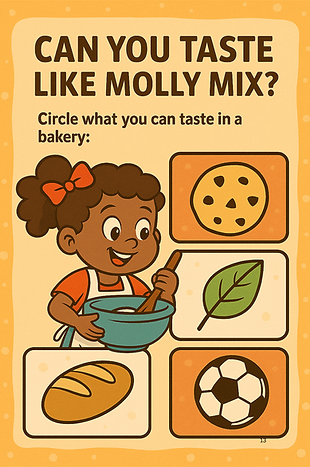
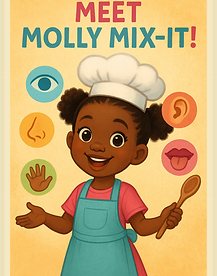
Using the Five Senses to Describe Food
This project demonstrates my ability to design standards aligned assessments and engaging instructional materials for elementary learners. Using the Molly Mix concept, I developed a unit focused on nutrition, kitchen safety, and measurement skills through hands on activities, differentiated assessments, and creative learning


03
Developing Procedural Thinking Skills
This activity was designed to reinforce sequencing, critical thinking, and procedural understanding through a baking themed learning experience. Students were asked to identify and arrange the steps for making vanilla cupcakes in the correct order, helping them practice following directions while connecting the lesson to real world kitchen tasks. The activity supports learner engagement and encourages students to apply problem solving skills in a fun and meaningful way.
04
Making Real World Food Connections
This activity was designed to reinforce sequencing, critical thinking, and procedural understanding through a baking themed learning experience. Students were asked to identify and arrange the steps for making vanilla cupcakes in the correct order, helping them practice following directions while connecting the lesson to real world kitchen tasks. The activity supports learner engagement and encourages students to apply problem solving skills in a fun and meaningful way.
AECT Standards Addressed
Standard 1: Content Knowledge — Creating, Using, Assessing/Evaluating
Molly Mix demonstrates my ability to transform content related to nutrition, kitchen safety, measurement, and sequencing into developmentally appropriate instructional materials and assessments.
Standard 2: Content Pedagogy — Creating, Using, Assessing/Evaluating
The project applies instructional strategies that connect content with hands-on experiences, visual supports, guided practice, and authentic assessment.
Standard 3: Learning Environments — Creating, Using, Assessing/Evaluating, Diversity of Learners
Multiple forms of instruction and assessment provide learners with varied ways to engage with content, practice skills, and demonstrate understanding.
Standard 4: Professional Knowledge & Skills — Assessing/Evaluating, Reflection on Practice
Assessment results can be used to identify learner strengths and needs, guide instructional decisions, and determine where additional support or differentiated instruction is needed.
Standard 5: Research — Assessing/Evaluating, Theoretical Foundations, Method
The design applies principles of authentic and performance-based assessment by aligning learning objectives, instructional activities, and measures of student understanding.
)_zip%20-%201.png)
This work demonstrates my ability to align learning objectives, instructional activities, and assessments into a cohesive learning experience. I can design multiple opportunities for learners to demonstrate understanding through discussion, observation, hands-on activities, and creative projects while using assessment data to inform instruction and support continued learning.